giovedì 27 marzo 2008

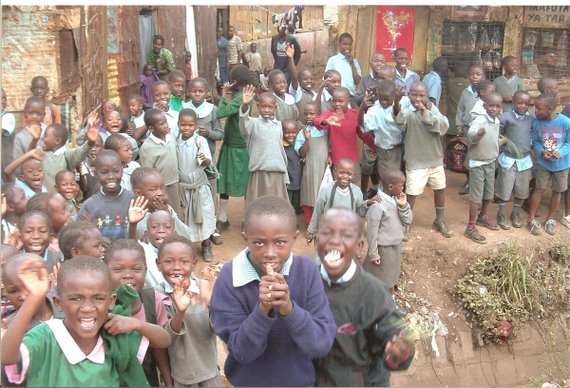
Un sorriso per un pò di riso


Le Filippine chiedono riso. La produzione dell'alimento base del sud est asiatico è in crisi. La Arroyo, presidentessa delle Filippine, ritornata al governo con poteri limitati cerca il riso dalle forniture vietnamite. Altra possibilità viene dal surplus, modesto, del Myanmar. Come si è giunti a questo? La cooperazione internazionale era intervenuta presso il Governo delle filippine., ma la reale efficacia di tali iniziative svela il problema di fondo. I capitali della cooperazione servono solo a chi predispone il finanziamento.
La corruzione, i sistemi infrastrutturali e la incapacità di generare cultura tecnologica rinviano i profitti della cooperazione alle società legate al mittente. Se non si crea una classe di produttori locali tecnologicamente aggiornata, il rischio che l'incremento della popolazione, che si è ottenuto con il miglioramento dello stato sociale, precipiti in una condizione di povertà e di fame è concreto ed a breve periodo.

sabato 15 marzo 2008

I seminari di Geapolis

Le ultime notizie dal Liceo Augusto

Conferenza Geapolis - Il tema di riflessione: "Nuove droghe e nuovi consumatori"
07 marzo 2008 -
L'associazione Geapolis incontra gli studenti delle classi II A-B-F-G per una discussione comune sul tema della diffusione di droga tra i giovani.
L'incontro avverrà nell'Aula multimediale "Giulia Songini" il giorno 15 Marzo p.v. alle ore 11. Partecipano il dott. Sergio Fioramonti, Dirigente medico dell'Azienda ospedaliera S. Giovanni-Addolorata e il dott. Massimo D'Annibale, membro della Consulta degli esperti e degli operatori sociali del Ministero della Solidarietà sociale.

mercoledì 30 gennaio 2008

Paesi depredati


Haiti 30 Gennaio 2008
La fabbrica dei biscotti di fango
Con la costante crescita dei prezzi del cibo, i più poveri a Haiti non possono comprare neanche un pugno di riso, così sono costretti a ricorrere ad un antico rimedio tradizionale: biscotti fatti di fango per non morire di fame. Il fango veniva anticamente utilizzato dalle donne incinte e dai bambini come antiacido e come importante fonte di calcio. Adesso per molti è il pane quotidiano. Due tazze di riso costano 60 centesimi, il 50% in più rispetto al 2007 in un paese dove l'80% della popolazione vive con meno di 2 dollari al giorno e solo una piccola elite controlla l'economia. Così alle donne non resta che comprare il fango e ricavarne, con 5 dollari, 100 biscotti che, lavorati con acqua e sale e lasciati seccare al sole, possano poi essere venduti al mercati o consumati in famiglia. La Fao (Food and Agriculture Organisation) ha dichiarato l'isola caraibica in stato di emergenza. ( da Rainews24)

L'Oceano bolle e muore


Scaling the metabolic balance of the oceans

Ángel López-Urrutia*,{dagger}, Elena San Martin{ddagger}, Roger P. Harris{ddagger}, and Xabier Irigoien§

*Centro Oceanográfico de Gijón, Instituto Español de Oceanografía, Avenida Príncipe de Asturias, 70 bis, E-33212 Gijón, Spain; {ddagger}Plymouth Marine Laboratory, Prospect Place, Plymouth PL1 3DH, United Kingdom; and §AZTI, Arrantza eta Elikaigintzarako Institutu Teknologikoa, Herrera Kaia Portualdea, 20110 Pasaia, Spain

Edited by James H. Brown, University of New Mexico, Albuquerque, NM, and approved April 6, 2006 (received for review February 10, 2006)

Oceanic communities are sources or sinks of CO2, depending on the balance between primary production and community respiration. The prediction of how global climate change will modify this metabolic balance of the oceans is limited by the lack of a comprehensive underlying theory. Here, we show that the balance between production and respiration is profoundly affected by environmental temperature. We extend the general metabolic theory of ecology to the production and respiration of oceanic communities and show that ecosystem rates can be reliably scaled from theoretical knowledge of organism physiology and measurement of population abundance. Our theory predicts that the differential temperature-dependence of respiration and photosynthesis at the organism level determines the response of the metabolic balance of the epipelagic ocean to changes in ambient temperature, a prediction that we support with empirical data over the global ocean. Furthermore, our model predicts that there will be a negative feedback of ocean communities to climate warming because they will capture less CO2 with a future increase in ocean temperature. This feedback of marine biota will further aggravate the anthropogenic effects on global warming.

global change | metabolic theory | oceanic carbon cycle

domenica 23 dicembre 2007

EU-CO2

Europe's car industry

Collision course

Dec 20th 2007 | MUNICH AND STUTTGART
From The Economist print edition

New emission rules hit German carmakers


David Simonds

IF BALI failed to produce much besides cop-outs and compromises, at least the European Commission showed that it means business when it comes to tackling carbon emissions. Transport-related CO2 emissions in the European Union grew by one-third between 1990 and 2005 and now constitute 27% of the EU total. Of these, the commission reckons, cars and vans are responsible for about half.

On Wednesday December 19th the commission published its final proposals for cleaning up Europe’s cars. Although it will be at least a year before they become law and there is still scope for some of the details to change there is now little doubt that in only a few years’ time European carmakers will have to meet the world’s strictest CO2-emission standards.

Continua su The economist

venerdì 21 dicembre 2007

Zimbabwe prossimo all'implosione


La Rhodesia sta per implodere. A luglio un secchio di acqua costava 50.000 dollari zimbabwesi, al cambio ufficiale di allora pari a 200 Dollari USA ( ma in pratica 35 cent al mercato nero). Un lavoratore dell Statoo ha una paga di 22 dollari USA al mese, vale a dire di circa settanta secchi di acqua.
In questi giorni il Governo ha deciso di stampare la moneta da 750.000 dollari Zimb. Valore attuale circa 6 $ USA. La crisi sarà devastante non solo per la popolazione che dovrà sopportare un novello Darfur,ma anche per i Paesi limitrofi. La malattie incombono e lo Zimbwawe è un serbatoio di tubercolosi resistente alla chemioterapia. A confronto l'AIDS sarà come un raffreddore. Cosa farà l'occidente? Poco. Attende che il leone muoia e poi spolperà la carcassa, ma ... attenzione.


Creative Commons License


Questo/a opera è pubblicato sotto una

Licenza Creative Commons.

lunedì 10 dicembre 2007

Europe and Africa An awkward meeting

Dec 8th 2007 | LISBON
From Economist.com
Robert Mugabe at the EU-Africa summit


IT IS a coincidence that Europe should try to relaunch its relations with Africa in Lisbon. It was from here, in 1415, that Portuguese ships first set out on the exploration and conquest of the dark continent; and it is here on Saturday December 8th that politicians from 53 African and 27 European countries gather at a summit.
The Portuguese, who hold the EU presidency, see this first EU-Africa summit since 2000 as the capstone of their six-month tenure. They accept that the summit carries a “political price”: the one-man-against-the-rest EU split caused by the refusal of Britain's prime minister, Gordon Brown, to attend, in protest against the presence of Zimbabwe's president, Robert Mugabe. But, the Portuguese say, China and others have forced their hand.
For the Europeans are worried that they are losing both trade and clout on a continent that they used to regard as their own backyard. Over the past five years resource-hungry China has swept across a grateful continent, buying oil and minerals. African-Chinese trade has increased five-fold over that time to more than $50 billion last year. Europe's long-standing links mean that it is still Africa's biggest trading partner, but the Chinese are catching up. For example in October the Industrial and Commercial Bank of China paid $5.6 billion for a 20% stake in Standard Bank of South Africa.
India, too, has been buying oil and mineral concessions in countries such as Sudan and Nigeria. America has revived its interest in Africa: it wants to take 25% of its oil imports from there to decrease its dependence on the Middle East. America has also been recruiting new allies, such as Mali, in its fight against Islamist terrorism.
Now Africa's leaders can pick their friends. As Shamsudeen Usman, Nigeria's minister of finance, says: “Nigeria is becoming a beautiful bride. What is happening is the Chinese, the Koreans, everyone is coming around, and if European companies do not wake up, they will see that most of the best businesses are taken.”
Europeans complain that China damages Africa by not linking its loans and investments to improvements in government and human rights. But Africans are dismissive: as one official says, “Europe is jealous. They say we have gotten a new colonial master, but our old one wasn't so good.”
The Lisbon summit will thus be an explicit counterpoint to the China-Africa summit of November 2006, when China cemented its new relationship with a promise of yet more money. Now the Europeans will try to woo the bride back from Beijing, using concessions and inducements.
The main concession is to be less critical of regimes that are a bit light-fingered, or disdainful of human-rights. João Cravinho, the Portuguese minister responsible for the summit, contends that the Europeans have been “excessively simplistic” in insisting on European models of government for Africa. Instead, Europe will “focus on the essence of government [and be] less hung-up on particular forms of decision-making.”
Getting into the spirit, Europe overturned its own travel ban on Mr Mugabe, a stranger to decent behaviour, to allow him to attend the summit. Mr Mugabe will be lectured—and is then free to join in the cuddly group photographs. Sudan's president, Omar al-Bashir, will also be at the summit, but there are no plans to nag him about brutality in Darfur.
Of the new inducements, trade deals called Economic Partnership Agreements are the ones Europe thinks will help Africa most. The EU argues that these are good for development, offering African countries full access to the European market while allowing them to keep about 20% of their own markets closed to protect fragile domestic industries. But some African countries, such as South Africa and Nigeria, argue that they are being bullied into making agreements by the end of the year. The Europeans argue that the deals are designed to encourage regional integration in Africa. The Africans retort that by making separate deals with different countries they are doing exactly the opposite.
Europe's new insouciance about human rights will worry many, especially those suffering atrocities in Zimbabwe and Darfur, while the inducements hardly look tempting. Europe needs to do much better than this if it is to win the bride.

lunedì 12 novembre 2007

Russia da rifare


La succesione dei disastri ambientali che periodicamente avvengono in tale Stato è il segno evidente dell'insano governo. I delitti eccellenti, i pugni di ferro sono espressione dello stato di criminalità dilagante che è fuoriuscita dalla dittatura stalinista. Il compito dell'Europa Unita è arduo, stretta dal ricatto energetico trasferisce ricchezza ed alimenta la casta dei predatori del popolo russo. La politica estera è alle corde. Qualcuno già conta....

mercoledì 7 novembre 2007

Nepalmountainnews

kag_tihar.jpg

A crow nimble food offered to it during Kaag Tihar-the first day of the second greatest festival of all Nepalis, Tihar. The five day-long festival also known as festival of lights has begun Wednesday, 7 Nov 07.

Tihar begins, Kaag Tihar being observed today

Nepalmountainnews Report | 7 Nov 2007

Tihar, the second biggest festival of the Nepali Hindus begins from Wednesday. Tihar is also known as the festival of lights. The first day of the festival today is being observed by offering food to Kaag (crow) as per religious traditions. Crow is regarded as the messenger of Yama, the god of death. There is a popular belief in hindu religion that one is sinned if he takes his meal without worshipping the crow. The festival is observed for five ... Read More »

Nepalmountainnews.com brings the New Nation Anthem of Nepal, Either Read & listen online or donwload it for offline purpose.

lunedì 5 novembre 2007

E la Francia .....

Nuova centrale nucleare per studiare l'innesco della fusione
La Gran Bretagna ospiterà questa ''centrale di studio'' finanziata dall'Unione Europea

[10/09/2007]
Nuova centrale nucleare per studiare l'innesco della fusione La Commissione Europea ha deciso di stanziare 500 milioni di sterline per finanziare la costruzione di un reattore nucleare in Gran Bretagna dove studiare l’innesco della fusione nucleare. Questo progetto affianca il reattore sperimentale ITER, in Francia, per cui la CE ha stanziato 5 miliardi di euro.
Il progetto HiPER (High Power laser Energy Research) consiste nel provare a usare un laser per innescare la reazione. Si partirebbe da acqua di mare per ottenere un isotopo pesante dell’idrogeno, il deuterio, da fondere con un altro isotopo dell’idrogeno, il trizio. Il trizio si otterrebbe direttamente dalle reazioni, senza bisogno di andarlo a cercare in natura. Il prodotto finale e’ elio, che potrebbe essere anche rivenduto all’industria.
Il costo energetico e’ sia quello di raggiungere la temperatura di reazione sia quello di contenere la reazione. Gli isotopi cominciano a fondersi sui 10 milioni di gradi, che vengono raggiunti puntando un laser da un petawatt, 10.000 volte l’energia disponibile nella rete britannica) su un bersaglio di pochi millimetri. La pressione innesca la reazione. Visto che non esiste un materiale che resti solido a 10 milioni di gradi, il contenimento si deve ottenere magneticamente.
Il completamento della centrale avverrà in un quinquennio, alla fine del quale inizierà la sperimentazione: gli addetti al settore contano di poter sviluppare il processo a livello commerciale per il 2020.

In Italia, invece, il partito dell'Uranio, sostenuto da Finmeccanica, spinge per la fissione nucleare.

domenica 28 ottobre 2007

Finalmente qualcuno parla


ONU: OGGI PRODURRE BIOCARBURANTI E' "CRIMINE CONTRO L'UMANITA'"

La produzione di bioetanolo e' oggi "un crimine contro l'umanita'". Le Nazioni Unite condannano severamente l'uso dei raccolti di cereali per produrre carburante alternativo alla benzina. A chiedere una moratoria di cinque anni e' stato Jean Ziegler, che per il Palazzo di Vetro cura il dossier sul diritto al cibo. Ziegler se l'e' presa con "la trasformazione del terreno agricolo in terreno utilizzabile per produrre cibo destinato a essere bruciato", in un mondo in cui 854 milioni di persone soffrono la fame e un bambino su dieci muore per malnutrizione. Inoltre, il prezzo dei cereali e' cresciuto in maniera rilevante e messo sotto pressione i Paesi africani, costretti a importare alimenti. Durante i cinque anni di moratoria, ha assicurato il Rapporteur dell'ONU, diventera' "possibile" produrre il bioetanolo da "residui agricoli". (AGI) - Nazioni Unite, 27 ott. -

Noi di Geapolis l'abbiamo sempre sostenuto ( vedi post del 13/5/2007)

giovedì 25 ottobre 2007

Razze in estinzione


Population growth and unsustainable consumption have resulted in an increasingly stressed planet where natural disasters and environmental degradation endanger millions of humans as well as plant and animal species, the report said. (Jacques Brinon/The Associated Press)

Humanity is putting Earth, and itself, at risk, UN environment report says

PARIS: The human population is living far beyond its means and inflicting damage to the environment that could pass points of no return, according to a major report issued on Thursday by the United Nations.

Climate change, the rate of extinction of species, and the challenge of feeding a growing population are among the threats putting humanity at risk, the UN Environment Program said in its fourth Global Environmental Outlook since 1997.

"The human population is now so large that the amount of resources needed to sustain it exceeds what is available at current consumption patterns," Achim Steiner, the executive director of UNEP, said in a telephone interview. Efficient use of resources and reducing waste now are "among the greatest challenges at the beginning in of 21st century," Steiner said.

UNEP described its report, which is prepared by 388 experts and scientists, as the broadest and deepest of those the UN issues on the environment, and called it "the final wake-up call to the international community." .............. Herald Tribune

martedì 23 ottobre 2007

Conosci l'Europa?


International Herald Tribune
Have you heard of the EU?
By Lorenzo Fioramonti and Sonia Lucarelli
Tuesday, October 23, 2007

BOLOGNA, Italy:

The European Union is the world's biggest market and a trade giant. EU trade and investment flows with the rest of the world are unparalleled, while support for peacekeeping missions spans through several regions of the planet, from Africa to Asia and the Middle East. European Commission diplomatic delegations are present in over 120 countries.

So why is the EU so little known around the world?

Various opinion polls, including the official Eurobarometer, have long shown that the EU does not warm hearts among European citizens. We have conducted a series of studies on the EU's external image and have found that the EU's profile in the rest of the world is even more worrisome than within its boundaries.

In most Latin American countries, only a minority of citizens have ever heard of the EU, while in Africa the EU is among the least known international institutions, largely surpassed by the UN and technocratic institutions like the WTO and the World Bank.

In 2001, only 23 percent of Chinese knew of the existence of the EU. In India, the EU is conspicuously absent from mainstream media as well as public debate, in spite of being the country's main trade partner and one of its most significant counterparts with regard to scientific and technological cooperation.

This situation does not change significantly when moving to richer countries: In Australia, Canada and Japan, knowledge of the EU as a political entity is quite low, although most people know of the European culture and have opinions about individual European countries.

Limited international exposure is likely to have numerous explanations.

First of all, the EU is not a conventional global player in that it is not a state, nor is it an international institution such as the UN. Its various layers of governance include policy areas that are governed by communitarian institutions and others that are under exclusive control of member states. This is further aggravated by the fact that EU foreign policy, which is the main medium through which the EU projects its global image, is profoundly divided and falls under the competence of the various member states.

Such a fragmentation is not only evident in well-known issues such as the war in Iraq or the nuclear proliferation in Iran, it also affects softer policies such as trade and development, where each member state has its own parallel institutions, interests and strategies.

Additionally, the EU's cultural message leaves much to be desired. Unlike the U.S., which has closely connected its political role with an all-encompassing cultural production, the EU is never or seldom associated with a European way of life in the eyes of foreign observers.

All these factors point to an overall question: What world does the EU aim to build?

In this regard, the root causes of the EU's lack of global image are not only to be found in its institutional setup or lack of cultural production, but also - and, more importantly - in the fragmentation of its social and political message.

So far, the EU has failed to successfully communicate not only to the European public, but also to the citizens of other countries, what are its ultimate goals as a global player. On crucial issues such as human rights and democracy, market economy and social justice, the EU has often acted with uncertainty and ambivalence.

Of course the EU is a complex actor, way more complicated than a nation-state. Yet, instead of endorsing "complexity" as the key to addressing global challenges, the EU's action has often been permeated by hesitation and contradictions.

Devoid of a clear socio-political message for its citizens and the world, the EU has become increasingly embroiled with its gigantic bureaucracy, which by contrast is characterized by a technocratic and simple-minded approach to the world's problems.

This whole range of factors makes it very difficult for external observers to understand what the EU is doing and what its global strategy is. As a consequence, foreign citizens are unlikely to have read or heard about the EU in the press or on TV. Even when they do find some information, they struggle to form an opinion about this new global actor.

So the key question is whether the EU can develop a clear global strategy amid its complexity. All things being equal, the odds seem to be in favor of an affirmative answer.

Simplistic approaches to international problems have proven disastrous, as the Iraqi campaign has demonstrated. Unilateral strategies have also revealed their weaknesses, as is epitomized by the growing isolation of the United States in areas ranging from security, to trade and climate change.

These changes demonstrate that current world affairs need a new leadership able to manage complex situations in a multilateral and participatory fashion.

In theory, the EU seems to have the right ingredients to provide this leading role. Unfortunately, it has thus far been swallowed by its own fragmentation and indecisiveness.

Only a new leadership able to foster a political and social identity inspired by the European values of solidarity, multilateralism and cultural complexity will be able to communicate a different message to the world.

This will strengthen the EU's role in the world and its roots in the hearts and minds of European citizens.

Lorenzo Fioramonti and Sonia Lucarelli are researchers at the University of Bologna.
Notes:
ADVERTISER LINKS
Deep Democracy
International Conference: Conflict, Body-Mind, Coma, Mental Health,
www.iapop-conference2007.org Peacemaking 1919
Peacemaking 1919 (1971) Movie Reviews, Ratings, & Rankings
Movies.TopTenReviews.com
International Herald Tribune Copyright © 2007 The International Herald Tribune | www.iht.com
domenica 21 ottobre 2007

Barili di sangue


Premier Erdogan chiede agli Usa ''azioni urgenti'' contro ribelli curdi
Il premier turco Tayyip Erdogan ha dichiarato ieri di aspettarsi dagli Usa, più che dall'Iraq, "azioni urgenti" nei confronti dei ribelli curdi del Pkk, che negli ultimi mesi hanno intesificato gli attacchi in territorio turco rifugiandosi poi nelle loro basi dell'Iraq settentrionale. Erdogan incontrerà il presidente statunitense George W. Bush a Washington, il prossimo 5 novembre, per discutere della questione. Questa settimana, il parlamento turco ha autorizzato possibili incursioni dell'esercito in territorio iracheno, nonostante il governo abbia sottolineato che potrebbe non avvalersi di questa possibilità, temuta da Baghdad e dagli Usa. I ribelli del Pkk, che lottano per la creazione di uno stato curdo indipendente, sono in guerra con Ankara dal 1984. ( da Peace reporter 20.10.07)

21. ottobre 2007. L'artiglieria turca ha bombardato questa mattina alcuni villaggi del Kurdistan iracheno. Lo smembramento dell'Irak continua e il genocidio Curdo anche. La motivazione è sempre la stessa : Petrolio, petrolio...petrolio
La politica di Bush sta squassando l'Europa e nonostante il debito pubblico fuori controllo gli States stanno dando gli ultimi colpi di coda. In Italia il nostro Governo continua ad eludere l'uso delle Energie alternative. Preferisce sfidare la Cina sul mercato delle mutande e delle T-shirt invece che sulla tecnologia energetica. La Germania insegna ed il mercato, in Europa, è suo.


Creative Commons License


Questo/a
opera è pubblicato sotto una
Licenza Creative Commons.

venerdì 19 ottobre 2007

Al crimine piace l'energia

Ekonomist
Ekonomist
Serbia Montenegro
15 gennaio 2007

Energia
Sempre più ricchi

La classifica delle cento persone più ricche d'Europa stilata da Ekonomist è dominata dai britannici. I sudditi di sua maestà presenti nell'elenco sono 22. Del resto negli ultimi otto anni di governo Blair il pil della Gran Bretagna è aumentato del 50 per cento. La seconda nazione più rappresentata è la Russia, che piazza in tutto 19 persone.

Per la maggior parte si occupano di energia e i loro patrimoni hanno registrato un'impennata negli ultimi anni grazie all'aumento dei prezzi delle materie prime. Anche i miliardari provenienti dal settore metallurgico hanno compiuto grandi progressi. È il caso dell'imprenditore indiano dell'acciaio Lakshmi Mittal, il cui patrimonio è cresciuto in un solo anno del 322 per cento. Ma in cima a questa speciale classifica del settimanale serbo si trovano rispettivamente due tedeschi e uno svedese: i fratelli Karl e Theo Albrecht, che operano nel settore della grande distribuzione e hanno un patrimonio di oltre 27 miliardi di euro, e Ingvar Kamprad, il proprietario di Ikea, le cui ricchezze ammontano a circa 24 miliardi di euro.

Da segnalare, infine, che nel solo 2005 la ricchezza complessiva dei 50 europei più ricchi è aumentata di 360 miliardi di euro. Essere ricchi, conclude Ekonomist, conviene. ( da L'Internazionale)

Intanto Sarkozy si lega a Gazprom e snobba i ferrovieri francesi.
I Governi dei premiers sono merce in vendita e con loro i Paesi che essi rappresentano.